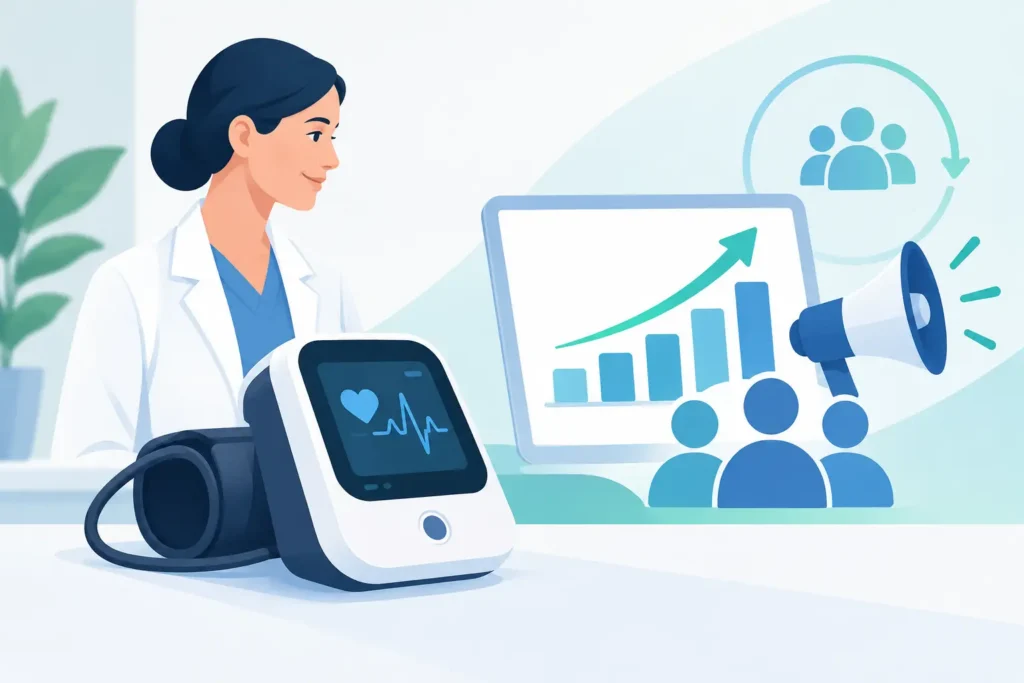
A device can solve a meaningful clinical problem and still struggle to gain traction. The issue is rarely product quality alone. Medical device marketing must translate technical evidence into a clear reason for a clinician, procurement leader, distributor, or patient to act – without overstating claims, creating friction, or losing the human value behind the innovation.
For device companies, growth depends on more than visibility. It depends on building confidence across a long, complex decision process. That calls for a marketing system that connects positioning, education, demand generation, sales enablement, and measurement around the real questions buyers need answered.
Why Medical Device Buying Journeys Are Different
Most medical devices are not impulse purchases. A surgeon may need to understand clinical utility, training requirements, workflow impact, reimbursement considerations, and peer experience. A hospital purchasing team may focus on cost, service reliability, implementation risk, and outcomes. If the device touches patients directly, the patient may need reassurance in language that feels clear and compassionate rather than technical or promotional.
Those audiences do not move through the same journey. A campaign built only around broad awareness can generate impressions without creating qualified demand. On the other hand, a heavily technical campaign may satisfy a clinical audience while leaving administrators and commercial stakeholders without a clear business case.
The strongest strategy starts by identifying who influences the decision, what evidence each person needs, and where uncertainty is slowing adoption. That work creates more useful creative, more productive sales conversations, and a better return on media investment.
Build Medical Device Marketing Around Proof
A compelling message should not begin with a list of features. It should begin with the problem the product helps solve. Perhaps it reduces procedure time, supports earlier diagnosis, improves consistency, lowers the burden on staff, or helps patients feel more informed and in control. The claim must be accurate, supportable, and relevant to the intended audience.
From there, proof gives the message weight. Depending on the device and market, proof may include clinical evidence, published studies, regulatory status, physician feedback, product demonstrations, workflow analysis, economic modeling, or carefully approved case stories. Not every asset needs every proof point. A paid search ad requires focus, while a product page or sales presentation can answer deeper questions.
Make positioning specific enough to matter
“Advanced technology” and “better outcomes” are common phrases because they sound positive. They are also easy to ignore. A more effective position makes a deliberate choice about the market problem the brand is best equipped to own.
For example, a diagnostic device company may lead with earlier, more consistent identification of a condition. A surgical technology brand may emphasize precision in a particular procedure or setting. A home-use device may focus on usability, support, and confidence between appointments. The right message depends on the evidence, the competitive landscape, and the audience’s level of awareness.
Specificity creates trade-offs. Narrowing the message can mean saying less about secondary benefits. Yet a focused idea is easier to remember, easier for sales teams to use, and more likely to differentiate the product where it counts.
Keep compliance involved from the start
Compliance review should not be the final checkpoint after creative has been built. When regulatory, legal, clinical, and marketing teams collaborate early, they can establish approved claims, required qualifiers, market-specific considerations, and clear boundaries for social, paid media, and sales materials.
This approach protects speed as well as credibility. Teams waste time when campaigns are repeatedly rewritten because the original concept was built on language that cannot be substantiated. Early alignment lets marketers create with confidence while respecting the standards that protect patients and the business.
Connect Education to a Conversion Path
Medical device companies often have strong educational content but weak conversion paths. A webinar, clinical guide, product video, or trade show campaign may attract real interest, then send visitors to a generic homepage with no next step matched to their intent.
Every high-value asset should have a logical path forward. Someone researching a clinical challenge may benefit from an evidence-based guide and an invitation to attend a demonstration. Someone comparing solutions may need specifications, implementation information, and a conversation with a specialist. A distributor prospect may need market potential, training support, and a clear route to partnership discussions.
This does not mean forcing every visitor into a form. It means providing the next useful action. In some categories, a short educational video or downloadable checklist can be the appropriate first conversion. In others, especially when purchase readiness is high, a demo request or sales consultation may be the better choice.
Landing pages are especially important. They should reflect the promise of the ad or campaign that brought visitors there, explain the product in plain language, provide appropriate proof, and make the call to action easy to find. Forms should ask only for information the sales team will genuinely use. Long forms often reduce conversion volume, but forms that are too brief may make lead qualification harder. The right balance depends on deal size, sales capacity, and the quality of traffic.
Use Channels for Their Real Job
No single channel carries a medical device growth strategy. Search can capture active demand from people looking for a solution, procedure, category, or brand. Paid social and programmatic advertising can build awareness among defined professional audiences and keep the brand visible during long consideration cycles. SEO strengthens long-term discoverability around clinical questions, product categories, and educational resources.
Email can nurture interest after a conference, webinar, or resource download. Public relations can reinforce credibility when there is meaningful clinical, business, or product news to share. Sales enablement materials ensure that the story buyers encounter online is consistent with the story they hear in a meeting.
The key is not to use every channel because it is available. It is to assign each channel a clear role. Search may be designed to capture high-intent demand. LinkedIn may help reach administrators, investors, and commercial partners. Educational content may support clinicians earlier in the research process. Retargeting may keep the brand relevant after a prospect has visited a key product or evidence page.
That clarity prevents a common problem: measuring every channel by immediate leads, then shutting down the programs that are helping create future demand. A long-cycle device purchase often requires both demand capture and demand creation.
Measure What Moves the Business Forward
Clicks, impressions, and cost per lead are useful operating metrics, but they are not the finish line. Device marketers should connect campaign performance to qualified opportunities, demo attendance, sales acceptance, pipeline value, distributor conversations, and revenue where attribution is available.
A practical dashboard should show which audiences and messages are producing meaningful engagement, not simply the lowest-cost traffic. It should also reveal leakage in the funnel. If paid search produces strong demo requests but few qualified opportunities, the issue may be targeting, landing-page expectations, follow-up speed, or lead scoring. If prospects engage with clinical content but never request a conversation, the next step may be unclear or too sales-focused.
Real-time data and AI tools can help identify patterns faster, such as which content themes generate stronger engagement or which campaign segments deserve more budget. They cannot decide what the brand should stand for, whether a claim feels credible, or how a clinician will interpret a message. Human judgment remains essential, particularly in high-trust healthcare categories.
Create a Growth System, Not a Campaign Burst
A successful launch can create momentum, but consistent adoption requires ongoing optimization. Sales feedback should inform messaging. Search behavior should inform content priorities. Website analytics should reveal where prospects hesitate. New clinical evidence, competitive moves, and market changes should shape the next round of creative and media decisions.
That is where an integrated partner can make a measurable difference. Whitehead Agency Group combines strategic marketing experience, AI-supported insights, and human-led creative judgment to help health-focused brands build stronger customer engagement and more accountable growth.
The most effective next move is often simple: choose one high-value audience, identify the unanswered question preventing action, and build a credible path from that question to a conversation. When marketing makes the decision easier, demand has room to grow.