
Canada is on the verge of a big change in patient care. By combining precision medicine with advanced computational tools, doctors are finding new ways to help patients. This is making a big difference across the country.
This mix is setting a new standard for digital health. It helps our medical teams focus on early disease detection and personalized care for each patient. This is a big step forward.
The role of artificial intelligence is now crucial, not just a future idea. It helps us deal with the complex needs of managing long-term health issues. This is especially important in our unique Canadian healthcare system.
Key Takeaways
- Precision medicine allows for highly personalized treatment plans for Canadians.
- Artificial intelligence accelerates the speed and accuracy of clinical diagnostics.
- Early disease detection remains the cornerstone of effective long-term patient outcomes.
- Digital health platforms are bridging the gap between remote communities and specialists.
- Proactive care models reduce the overall burden on our national medical infrastructure.
The Convergence of Artificial Intelligence and Precision Medicine
Canadian healthcare is moving into a new era. Technology and biology are coming together. Artificial intelligence is being used in clinics to understand patient health better. This means doctors can offer more personalized care.
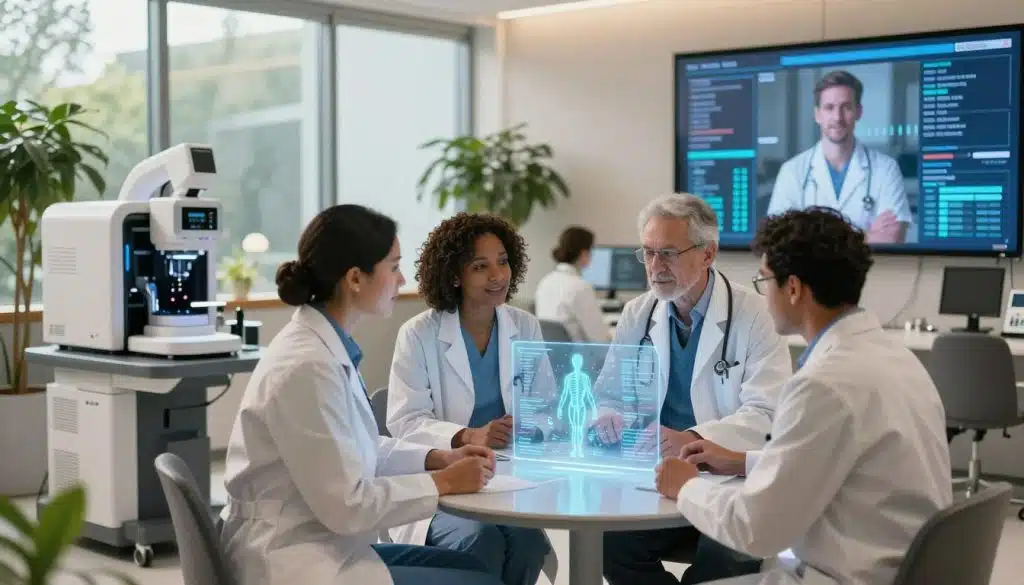
Transforming Diagnostic Accuracy in Canadian Healthcare
The main goal is to make diagnostic accuracy better across Canada. Doctors use advanced algorithms to quickly analyze medical images and lab results. This data-driven decision-making helps spot health issues early.
These tools help reduce mistakes in busy hospitals. They are being used in cities and rural areas. This change is a big step forward for healthcare in Canada.
Leveraging Genomic Data for Personalized Treatment Pathways
Genomic data is changing how we plan treatments. Doctors can now create personalized treatment plans based on a person’s genes. This move to precision medicine cuts down on trial-and-error treatments.
Patients get treatments that fit their genetic makeup. This often means fewer side effects and better recovery rates. As we improve these methods, more Canadians will get effective, tailored care. This is a key step in the future of medicine.
Key Innovations Driving Modern Disease Detection
Innovative software is changing how hospitals work. It brings advanced digital tools to help doctors find diseases more accurately. This means they can catch important details that might be missed.
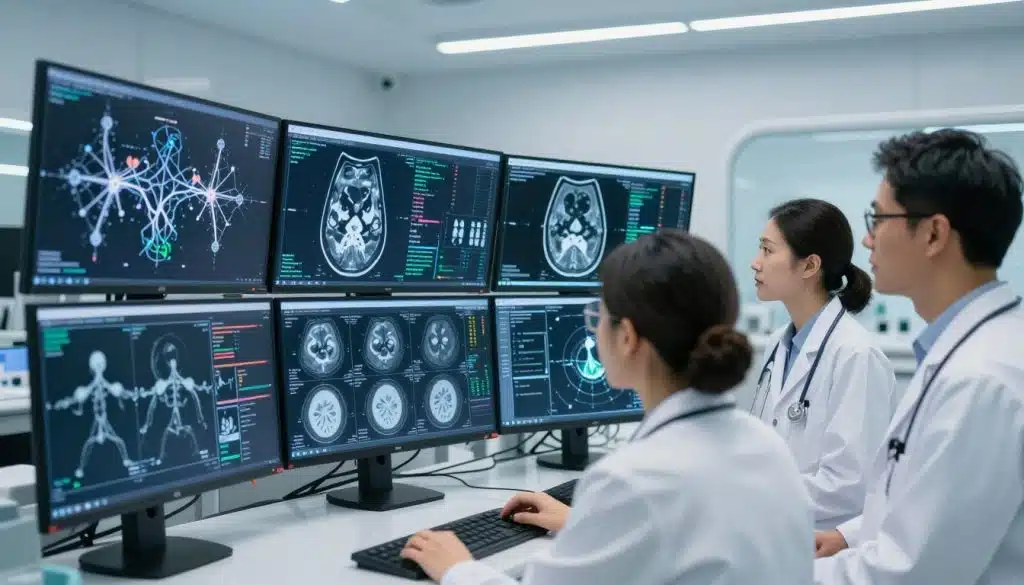
Machine Learning Algorithms in Medical Imaging
Machine learning has changed how doctors read scans. These algorithms look at lots of data to find things that might be hard to see. This helps keep patients safe by catching problems early.
Enhancing Early Detection of Oncology Markers
Acting fast is key in cancer treatment. New software is great at spotting oncology markers early. This means doctors can start treatment sooner than before.
Reducing Diagnostic Errors in Radiology
Doctors in radiology see a lot of cases. This can lead to mistakes. But, new tools help by giving a second opinion on images. This makes sure patients get the right diagnosis without needing to be tested again.
Predictive Analytics for Chronic Disease Management
The healthcare world is using predictive analytics for long-term health. It helps focus on preventing problems instead of just treating them. This way, doctors can keep an eye on chronic disease in different patients.
Identifying High-Risk Patient Populations
With data, hospitals can spot who needs help the most. This lets doctors act before things get worse. It’s a smart way to make healthcare better and more efficient.
- Proactive Monitoring: Keeping an eye on important health signs.
- Resource Allocation: Giving special care to those who really need it.
- Improved Outcomes: Lowering hospital readmission rates by acting early.
- Data Integration: Using all electronic records for a full picture of patient health.
Conclusion
The move to precision medicine is changing healthcare in Canada. Using digital health is key to solving tough diagnostic problems across the country.
Healthcare innovation needs data to work well in daily practice. When doctors use the latest health tech, they can make crucial decisions for their patients.
Strong clinical decision support systems help doctors work faster and more confidently. These tools cut down on paperwork and focus on what each patient needs. This leads to better care in hospitals from Vancouver to Halifax.
Keeping up with these systems is crucial for our healthcare future. Everyone involved must support the use of these digital tools. This ensures Canada’s healthcare stays strong and ready for what’s next.
What do you think about these tools in your local clinic? Sharing your thoughts helps shape the future of healthcare for all Canadians.